How creators can find better sponsor leads
A practical way to find brands that already sponsor creators like you, then pitch them with evidence instead of guesswork.
Most sponsor outreach starts in the wrong place. A creator opens a spreadsheet, writes down brands they personally like, guesses a few emails, and sends the same pitch to everyone. It feels productive because the list gets longer. The problem is that most of those brands have not shown any sign that they buy creator sponsorships.
A more useful question is: "Which brands are already paying creators who look like me?"
If a company sponsored three channels in your niche this month, you are not trying to convince them that creator marketing exists. They already believe it. Your job is smaller and more specific: show why your audience is a good next test.
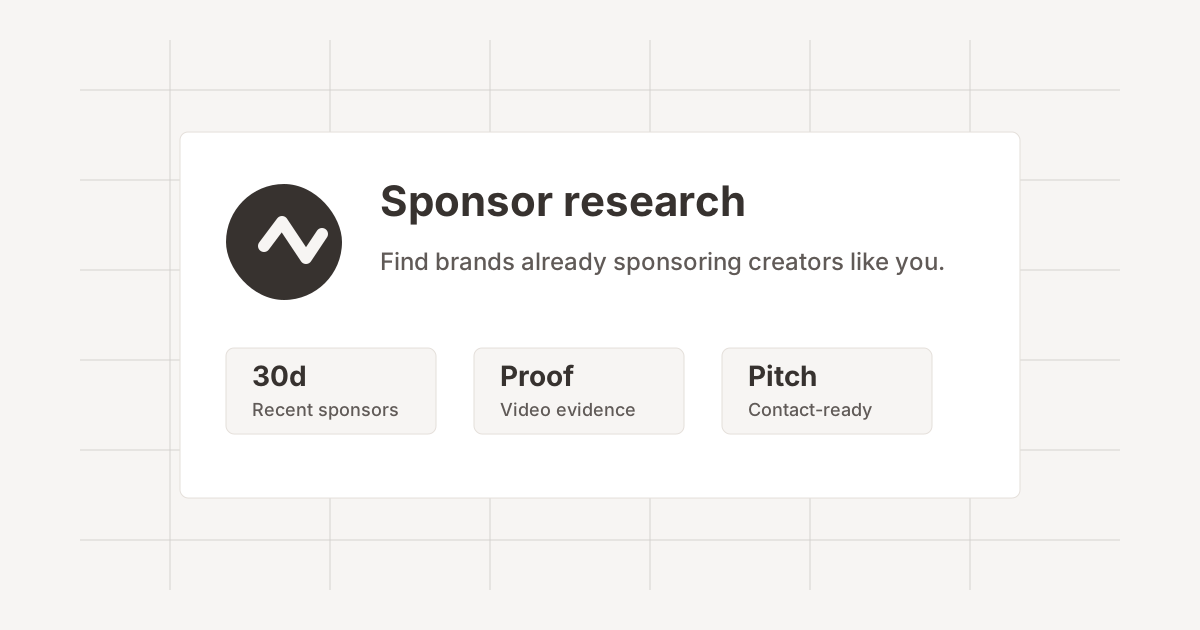
Start with market proof
One sponsored video does not tell you much. A brand might have tested a creator once, disliked the results, and moved on. It may have been an affiliate placement. It may have been a one-off deal through an agency.
Several sponsored videos across several creators tell a different story. That usually means someone on the brand side is comfortable spending on creator partnerships. It also means they have some idea of what a good creator fit looks like. You can see this pattern directly in the CreatorSponsors sponsor database, where brands are sorted by recent creator activity and sponsored videos.
For example, if you make finance content, a random software company is a weak lead. A software company that recently sponsored personal finance channels, investing channels, and AI productivity channels is much more interesting. That brand has already crossed the mental hurdle. They are not asking whether creators can work. They are asking which creators are worth trying next.
Market proof also protects you from chasing brands that only seem relevant from the outside. A skincare brand might feel perfect for a wellness creator, but if it never sponsors YouTube and only buys Meta ads, the pitch is colder. A boring budgeting app with six creator placements in the last 30 days is probably a better lead.
Use recency
Recency matters because sponsorship budgets move. A brand that sponsored creators two years ago may have changed agencies, cut the channel, hired a new growth lead, or shifted to paid social. Old sponsor history is still useful context, but it should not be treated the same as fresh activity.
For outreach, the last 30 days are the strongest signal. If a sponsor appeared in creator videos recently, there is a better chance the team still has budget, the campaign is still active, or the person managing creator partnerships is still looking for more creators. The public brands index is built around that kind of fresh sponsor activity, not a static list of company names.
The last 90 days are also useful, especially for brands that run campaigns in waves. Some companies book a group of creators, pause, measure results, and then come back for another round. If you see a brand sponsor five videos in July and nothing in August, that does not mean the brand is dead. It means you should pitch with a little more context and less urgency.
Anything older than that needs more caution. It can still help you understand a brand's history, but it should not be the main reason you send the email.
This is where a lot of creators waste time. They find a sponsor from an old video, assume the brand is still buying, and spend an hour writing a custom pitch. Sometimes it works. Most of the time, fresher sponsor evidence would have been a better use of that hour.
Match the sponsor to your size
Subscriber count is not everything, but it matters. A brand that only sponsors channels with 2 million subscribers is probably not the best first target for a creator at 40,000 subscribers. The reverse is also true. A brand that mostly works with small niche creators may not be set up to pay for a much larger channel.
The best leads usually sit near your size range. If you have 200,000 subscribers, look for brands sponsoring creators around 50,000 to 1 million subscribers. That gives you enough room for comparison without pretending every creator is the same.
This also helps you price yourself. If a sponsor works with channels close to your size, you can talk about fit and audience quality instead of sounding like you picked a random number from a rate card.
Audience fit still matters more than vanity numbers. A 100,000 subscriber channel with a clear buying audience can be more useful to a sponsor than a 700,000 subscriber channel with broad entertainment traffic. But size gives you a practical filter. It keeps your lead list realistic.
Look at the creator mix
Do not stop at the sponsor name. Look at the creators they picked.
If a brand sponsors tutorial channels, review channels, and comparison videos, they probably care about buyers who are actively researching. If it sponsors podcasts and commentary channels, it may care more about trust and repeated exposure. If it sponsors shorts-heavy creators, it may be testing awareness.
That creator mix tells you how to write the pitch. A brand that buys tutorial integrations should not receive the same email as a brand buying personality-led podcast mentions. The product might be the same, but the reason they sponsor creators is different.
This is also where smaller creators can find openings. A brand may already sponsor large channels, but all of them might be in the same format. If you can offer a different format with the same audience, that is a real angle.
Pitch with evidence
Generic outreach sounds cheap because it makes the sponsor do all the thinking. "I love your brand and think it would be a great fit for my audience" is easy to ignore. It says nothing about why the brand should care now.
A better pitch starts with evidence. Mention that you noticed the brand recently sponsored specific creators in your niche. Then explain why your channel reaches a similar audience or fills a gap in that campaign. If you use CreatorSponsors, the outreach workflow can turn that sponsor proof into a saved pitch and reply thread inside the creator outreach dashboard.
The point is not to copy another creator's pitch. The point is to show that you understand what the brand is already doing.
For example, a weak pitch says, "I make finance videos and would love to work with you." A stronger pitch says, "I noticed you recently sponsored finance and AI productivity creators. My channel reaches viewers who are already comparing tools for investing, budgeting, and small business workflows, so I think there is a natural overlap."
That is still simple. It is also much harder to dismiss.
Do not over-personalize the wrong things
Creators are often told to personalize every email. That advice is only half right.
Personalizing around shallow details wastes time. "I saw your latest product launch" does not mean much if every other creator can say the same thing. Personalizing around sponsor behavior is more useful because it connects your pitch to money the brand is already spending.
If you mention their recent creator activity, you are not flattering them. You are showing timing, fit, and awareness. That is the kind of personalization that can change the conversation.
You also do not need a long email. Most sponsor teams are busy. Give them the proof, give them the audience fit, and make the next step easy. If the email includes a paid placement or endorsement later, the FTC endorsement guidance is worth reading before the campaign goes live.
Build a repeatable list
The goal is not to find one sponsor. The goal is to build a repeatable system.
Start with your niche, country, language, and subscriber range. Find brands that recently sponsored creators in that market. Remove brands that only show weak affiliate evidence if your client or channel does not want that type of deal. Keep the brands with clear sponsored videos, multiple creator placements, and recent activity. YouTube also has its own guidance for paid product placements and sponsorship disclosures, which is useful once a deal moves from research to production.
If your niche is seasonal, check timing before you pitch. A travel creator pitching luggage brands in peak booking months has a different angle than the same creator pitching in a quiet month. Public tools like Google Trends can help you sanity-check whether interest in a category is rising or fading before you spend a week on outreach.
Then work the list in order. The brands with the most recent, most relevant evidence go first. The older or less certain leads go later. Creators who need contact data, pitch drafts, and reply tracking can compare the current CreatorSponsors plans before building a larger outreach workflow.
If you have a question about sponsor research or want help checking whether a niche has enough data, use the CreatorSponsors contact page.
This makes sponsor outreach feel less random. You are no longer hoping a brand likes your channel. You are finding companies that already buy creator attention, then showing why your audience deserves a slot in the next campaign.
That is the whole shift. Good sponsor research does not make the pitch fancy. It makes the pitch easier to believe.